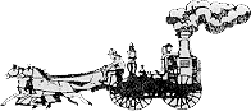
ARE THE FIRE HORSES GONE FOREVER?
Were they just glorified pulling nags?
What made them different from other teams of their era?
FIRE HORSES WERE INDEED A SPECIAL BREED
Aroused from a sound sleep by a clanging gong, they had to react as quickly as a race horse at
the starting gate.
Without prodding, they had to back up to a strange hulking piece of fire apparatus while some
weird spiderweb of harness hung over them. Nor could they flinch when the heavy gear
dropped to their backs.
The fire horse stood his ground, despite heat and roaring flames, the shower of sparks and
glass, and the steamer smoke swirling around him. Despite the shouting of firefighters, the
hubbub of more horses galloping in, the crashing of walls and the subzero temperatures that
often found them covered in an ice spray, fire horses remained loyal. It was very common to
find large burns on the horses' sides caused by falling embers or radiant heat. Still, they stood
their ground.
A FIRE HORSE HAD TO BE YOUNG, IN EXCELLENT HEALTH, BIG (15 HANDS),
STRONG, AGILE, OBEDIENT, AND FEARLESS. IT HAD TO BE THE CREAM OF THE
BREEDING FARMS.
Buyers traveled as far as the Midwest to buy the best.
There was no sex discrimination.
Teams were matched for size, and you were lucky if the colors were the same.
The horses were trained on the job. There never was a complete set. One horse at a time was
brought in to train alongside two veterans.
MANY HORSES KNEW WHICH ALARM WAS THEIRS. THE FIRST NUMBER OF A
BOX ALARM IDENTIFIES WHICH COMPANIES RESPOND. IF THE NUMBER WAS
THEIRS, THEY WOULD BEGIN PADDING IN THE STALL, WAITING FOR THE CHAIN
TO COME DOWN.
Drivers had to be belted in their seats. One driver fell from his seat, landed on a pole between
the horses, and the driverless team continued to the fire, where it pulled up alongside another
steamer.
The team would speed up if it caught a glimpse of the blaze.
A fallen horse in a three hitch team would be dragged to the fire by his mates, who knew their
job wasn't done until they reached the fire.
A thrown shoe from a galloping team broke a third floor window.
LENGTH OF SERVICE RANGED FROM FOUR TO TEN YEARS
Spare horses were put into service so veterans could get a vacation, years before firefighters
received their vacations.
Veterinarians kept the horses under close watch, and the first sign of weakness or disease meant
the end of service for the horse.
Large companies clambered for these strong steeds as they were relived of fire duty. A milk
company made a deal with a prominent city to buy all the old fire horses. The horses had no
trouble pulling the heavy milk trucks, but one day there was a fire downtown. As the horse
drawn apparatus sped to the scene, they were joined by a fleet of milk trucks and a trail of
broken bottles. The horses were found at the scene of the blaze standing right beside the
steamers, obscured by the smoke and haze.
After this calamity, the old fire horses were sold to farms where they spent their days far
removed from the bells and steamers.
THE HORSES WERE REPLACED BY MOTORIZED APPARATUS
It was very difficult for the firefighters to part with their noble steeds and welcome a hulk of
metal that showed no emotion at all.
The question I asked at the beginning of this presentation was "are the fire horses gone?" It may have sounded redundant, however, many times I have worked multiple alarm fires in the dead of winter, usually two or three o'clock in the morning, with cold, gusty winds. As I look back from the hose line to the pumper, I'll see someone sitting on the sidestep, his woolen watch cap set squarely on his head, covered in a thin layer of ice. A closer look reveals a firefighter who has retired the month before. As I approach him, he holds out a steaming cup of coffee wrapped in a knarled and callused hand and asks, "cold enough for you, Cap?"…
THE OLD FIRE HORSES WILL ALWAYS BE WITH US!